
THE BOTTLENECK
A personalization strategy was blocked by a fragile production workflow
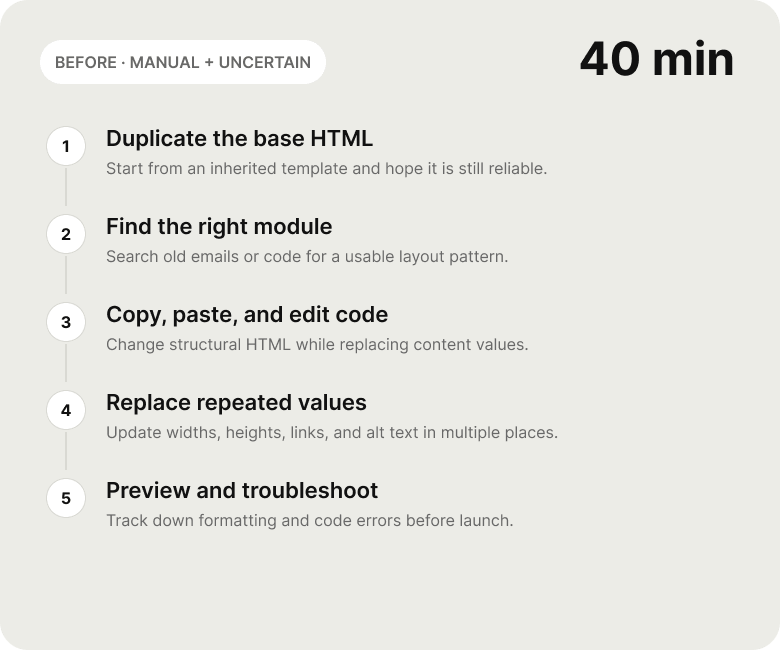
UNIQLO wanted to create more relevant email content, but two designers were already at capacity producing and manually coding one national send each day. The inherited codebase was unreliable: a routine build took about 40 minutes, while troubleshooting could stretch the work to several hours. The team had neither the production capacity nor the dependable mechanism needed to segment campaigns by audience, region, or context. Designing more campaign concepts would not solve the constraint upstream.

THE DIAGNOSIS
The highest-leverage intervention was removing technical work from the designers
I spent a day observing the existing production process and mapping each step required to move from design to launch. Repetitive editing, code interpretation, and QA created most of the uncertainty. The intervention therefore had to do more than accelerate typing: it needed to remove existing defects, prevent designers from introducing new ones, and shorten the path to a validated build. Given the two-week timeline and $0 added budget, embedding a maintainable system in the team’s existing editor was more practical than creating a standalone application.
THE SYSTEM
Reusable blocks and guided fields made the safe path the fastest path
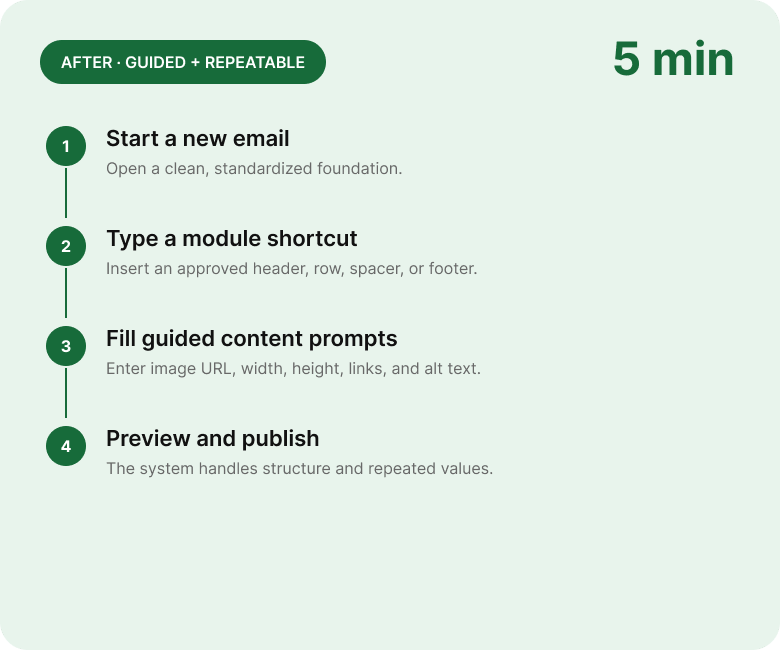
I rebuilt the workflow as three coordinated parts.
Standardized foundationI sanitized and modularized the inherited master code so every email began from a dependable source.
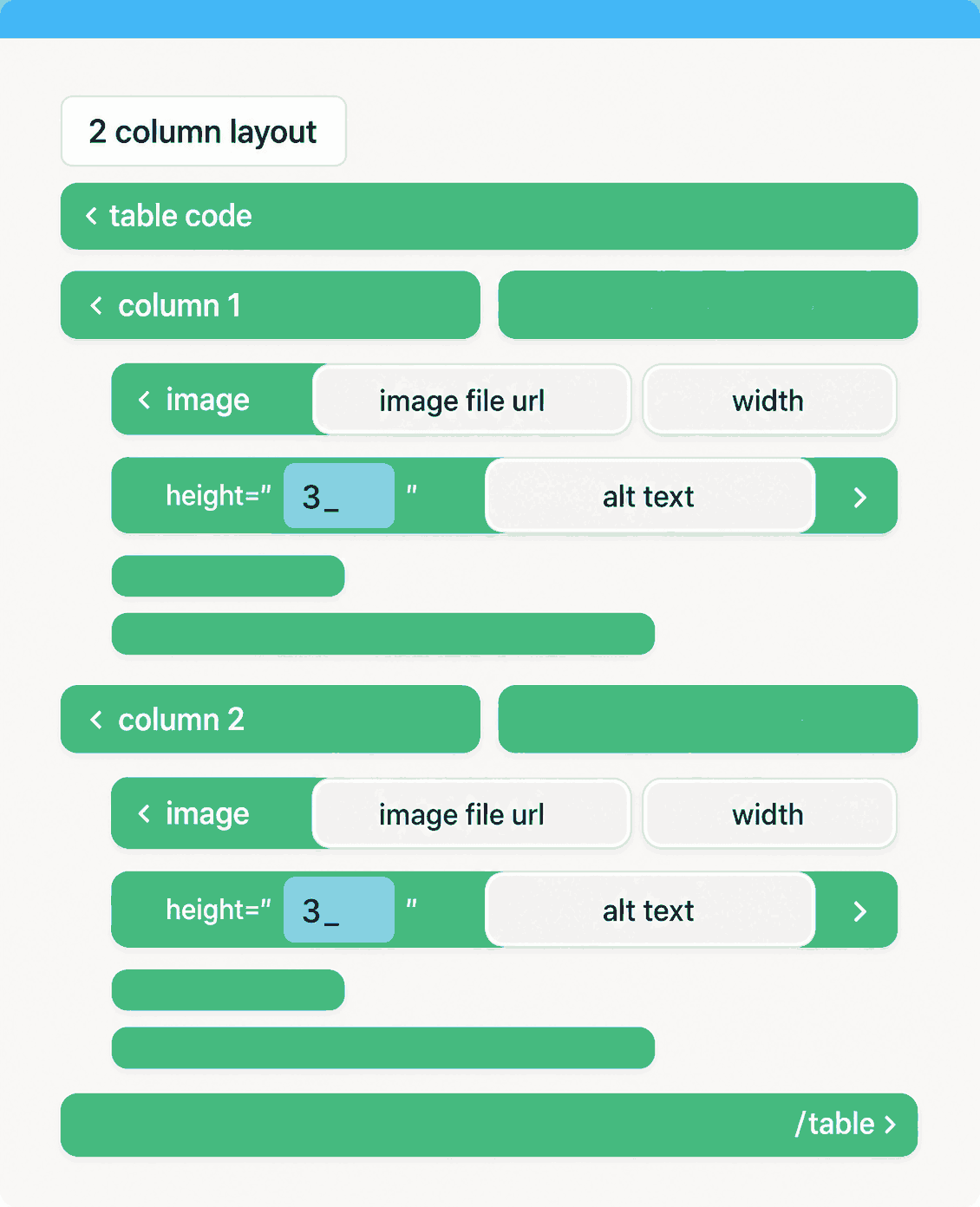
Reusable block libraryDesigners inserted approved modules through memorable shortcuts instead of locating, copying, and modifying old code.
Guided content fieldsEach module prompted only for values such as image URL, dimensions, and alt text, while the system protected structural code and repeated shared values automatically.
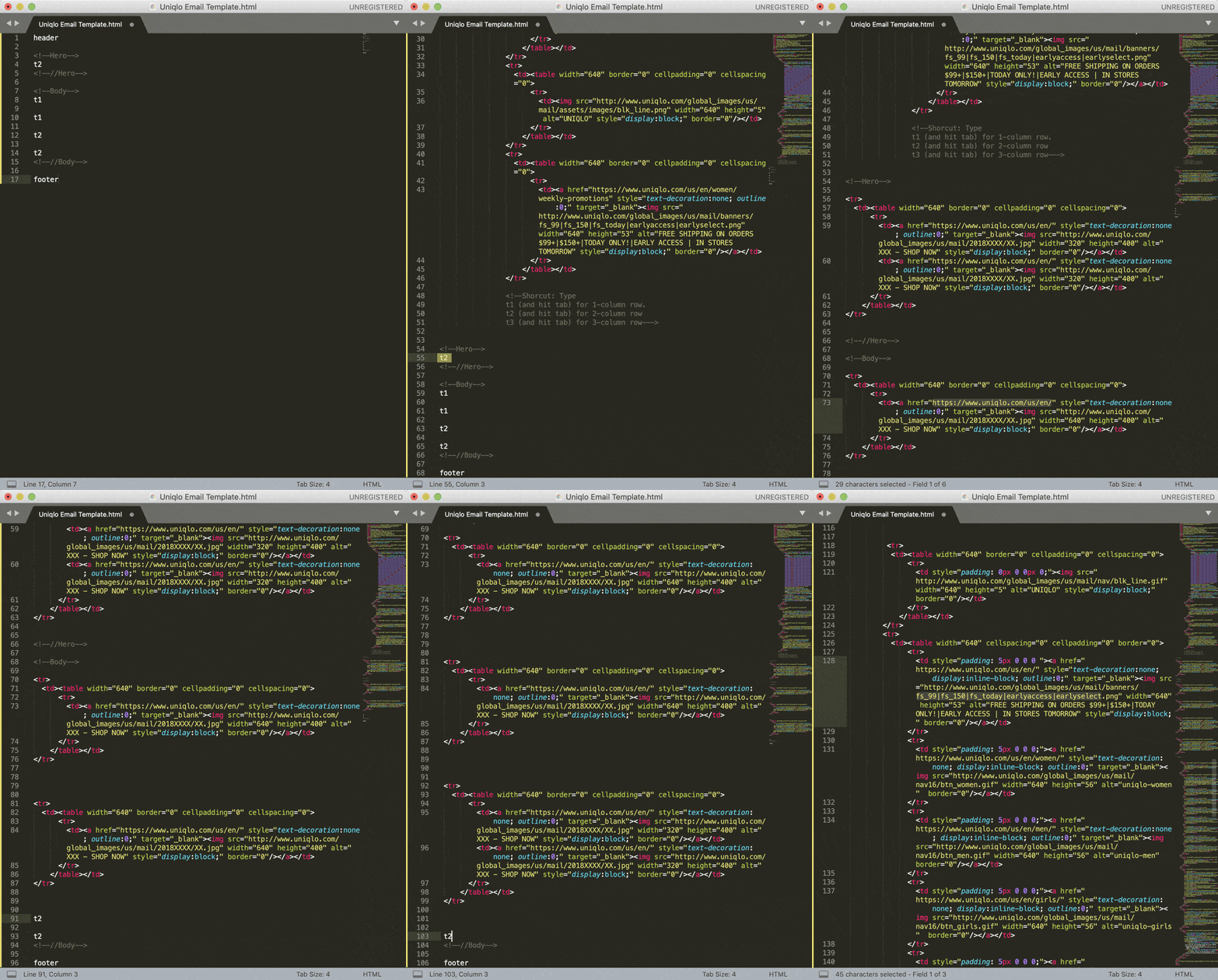
I tested the system against the active build queue, piloted it with the designers, added requested campaign variants, and created a video walkthrough and shortcut guide so the team could operate it independently.
THE OUTCOME
Build time fell 87.5%, giving the team capacity to triple weekly output
During the pilot, average build time fell from approximately 40 minutes to five. The team increased weekly output from 7 to 21 emails while the new workflow was implemented alongside the normal launch calendar, with no added business spend.
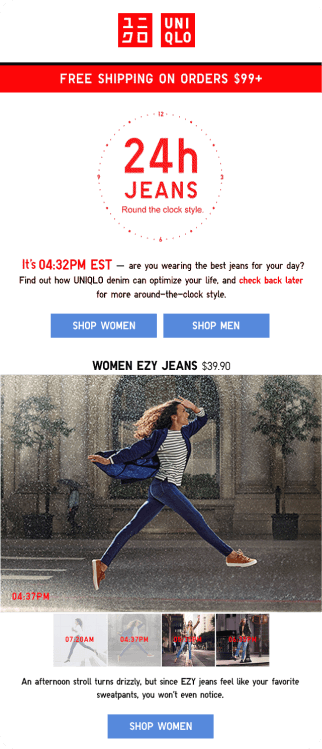
That capacity enabled geo-based product recommendations, live polls, gender-segmented creative, closer alignment with the social team, and more product education. These were content capabilities enabled by the workflow; the project did not measure downstream subscriber or revenue impact.

Takeaway: Customer experience can be constrained by invisible internal systems. Improving the production workflow created more leverage than designing additional campaign concepts would have.